In Defense of Commodore Pt.1: Ease of Use
Commodore caught a lot of flack for CDTV, and I get that. There are plenty of things that could’ve been done much better. But hindsight is 20/20, and with more than three decades of perspective it’s not hard to see why CDTV failed in the marketplace. Though, rewind to the late 1980s, when development on CDTV started, and the world of consumer electronics and computers looked very different from today. Things we take for granted now weren’t obvious back then. In this series I’ll highlight and defend some of Commodore’s choices during the platform’s development.
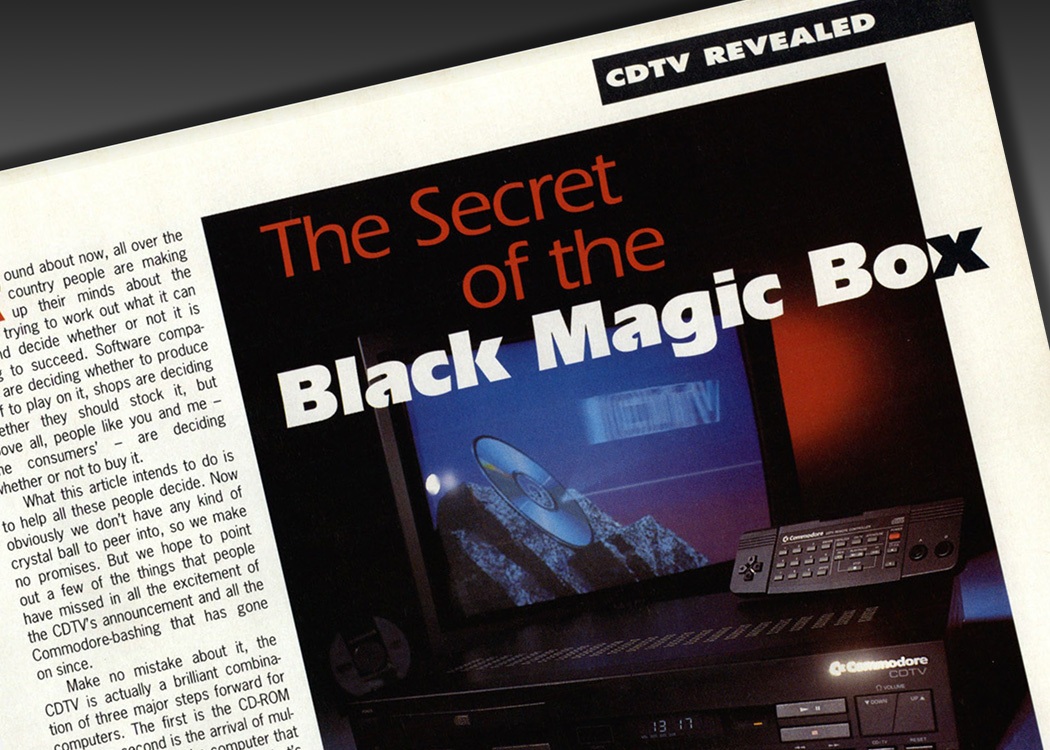
I was a teenager with an Amiga 500 when I first spotted CDTV in an issue of Amiga Format magazine back in 1991. The machine looked incredibly cool, and the promise of music, video, games and interactive stuff on the TV felt like the future. Sure, I couldn’t afford one (not by a long shot, I could barely afford the magazine), but the simple, mainstream-friendly UX made a lot of sense to me. I loved the idea of relaxing on the couch, pressing a button and getting content. I still do, by the way. This has not changed.
Despite how badly CDTV crashed and burned, I think Commodore was on the right track with the living‑room appliance idea, and making the device work with your TV was a no-brainer. Everyone knows a TV! Swapping keyboard and mouse for a TV‑style remote, and replacing fiddly software installation procedures with the simple act of inserting a compact disc into a CDTV player, lowered the barrier in a way a desk‑bound computer couldn’t in 1991. It just made complete sense to try to create that market.
CDTV feature article in Amiga Format – July 1991 issue
I also remember back in the day many Amiga owners were loudly critical of CDTV, claiming the living room appliance thing was a stupid idea, and often judging CDTV by desktop standards, expecting full Amiga compatibility, expandability and the usual hobbyist niceties. But that’s really looking at it through the wrong lens! And I say this as someone who has spent an unreasonable amount of time looking at it through every available lens. Commodore was trying to build a living room appliance for ordinary people who didn’t want to learn file managers or screw around with hardware. From that angle, a simple remote control and easy to use titles made perfect sense, even if it felt like a neutered Amiga to some enthusiasts. (Some enthusiasts still feel this way. You know who you are.)
Execution is Everything
While the broad concept of CDTV was right, it failed in the execution stage, which admittedly is a very important stage. Commodore, to their credit, were very thorough about failing. There are many (many!) reasons for why CDTV failed, enough to dedicate a whole article to, but if I had to pick two things, -and my editor, if I had one, would insist I do – I would say it was mainly due to the technology not being up to snuff, and Commodore not having the financial means to afford a product like CDTV time to develop.
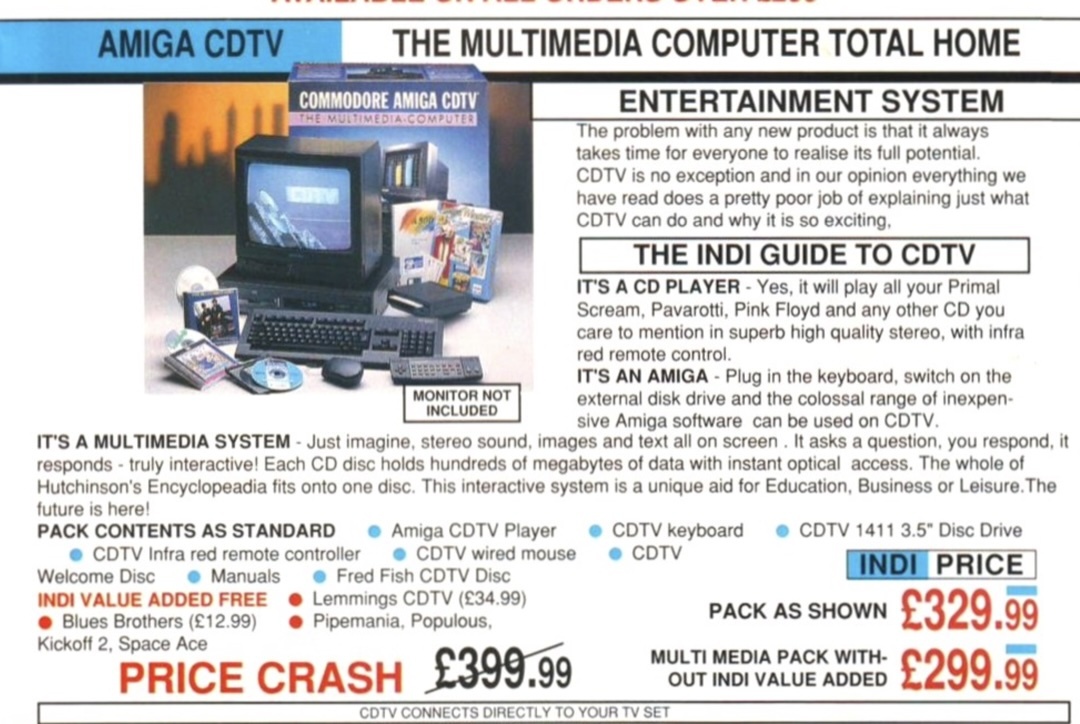
Case in point (and this is where I need to stop defending Commodore for a moment): after CDTV didn’t become the instant money-spinner Commodore wanted needed, they started hawking their enormous pile of unsold CD1000s bundled with a keyboard, mouse and floppy, i.e. as a computer. This knee jerk shift in strategy after the product had already been manufactured made things worse: some A500 games choked on the CD1000’s reduced free RAM on boot, and licence locks stopped normal CD‑ROMs from booting. It was a dumpster fire of Commodore’s own making and no wonder that retail prices of CDTV went down faster than their stock could be shifted into bargain bins. Oh, to be able to go back in time and score some of that sweet CDTV stock for pennies. Check out this ad and try not to cry:
1993 ad for CDTV Multimedia Pack for 299 GBP
Today however, there’s no doubt there always was a market for interactive living‑room entertainment. Apple TVs, Rokus, Chromecasts, Shield TVs, PlayStations, Xboxes and similar devices that do video, music and games prove that. CDTV was just way too early to the party. ■
See you on the next track!
— Captain Future