


In Defense of Commodore Pt.3: The Chicken and the Egg
In my earlier diatribe I made the case for the licensing and royalty model Commodore built into CDTV. This time, I want to look at arguably the biggest structural challenge Commodore faced in getting any of that to work: the chicken-and-egg problem. A new platform needs content to attract buyers. But publishers won’t invest in content without buyers already there. It’s a self-defeating loop. Round and round it goes.
CDTV had this problem in spades. Even though, at first glance, a catalog of approximately 100 CDTV titles at launch sounds impressive, the bitter truth is that the majority of these titles were of poor quality, lazy ports of existing Amiga games with barely any improvements, or the usual shovelware collections. Hardly content for the average consumer to rush out and buy a $1,000 CDTV player for. (Note that this a thousand dollars in 1991 money. That’s like a million dollars today!) To compound the problem, interactive multimedia for the living room was an entirely new consumer category, unlike a games console, which could at least claim to be a games console (a category people understood) .
Building the Platform
Commodore’s standard operating procedure with the C64 and Amiga was essentially to ship the hardware, put out some first-party software, and let the market figure it out. That works fine for general-purpose computers, where people find uses for them regardless of what any particular publisher does. CDTV didn’t have that luxury. Without titles, in its stock configuration, it was a very expensive CD player. A handsome one, yes! It really is a good-looking machine, but one that would sit in your living room while you explained to every visitor what it was supposed to be.
To their considerable credit, Commodore recognised the problem and put real resources behind it. Irving Gould, Commodore’s notoriously tight-fisted chairman, authorised a five million dollar development fund, distributed among roughly 35 developers and publishers. The largest chunk went to Grolier, who delivered a CDTV title of their electronic encyclopedia. On top of that, Commodore bought a $150,000 CD-mastering machine and made it available to registered CDTV developers, removing a significant cost barrier for smaller studios at a time when professional mastering equipment was accessible to almost nobody outside of major publishers.
And then Gail Wellington, Commodore legend and -at that time- Director of Special Projects, personally got on planes and made the case for CDTV to publishers. The roster she assembled looked impressive: EA, LucasFilm Games, Disney, Accolade, Bethesda, Cinemaware from the US; Ocean, Psygnosis, Virgin, US Gold, Domark from the UK. If you knew the games market in 1990, that list was a who’s who.
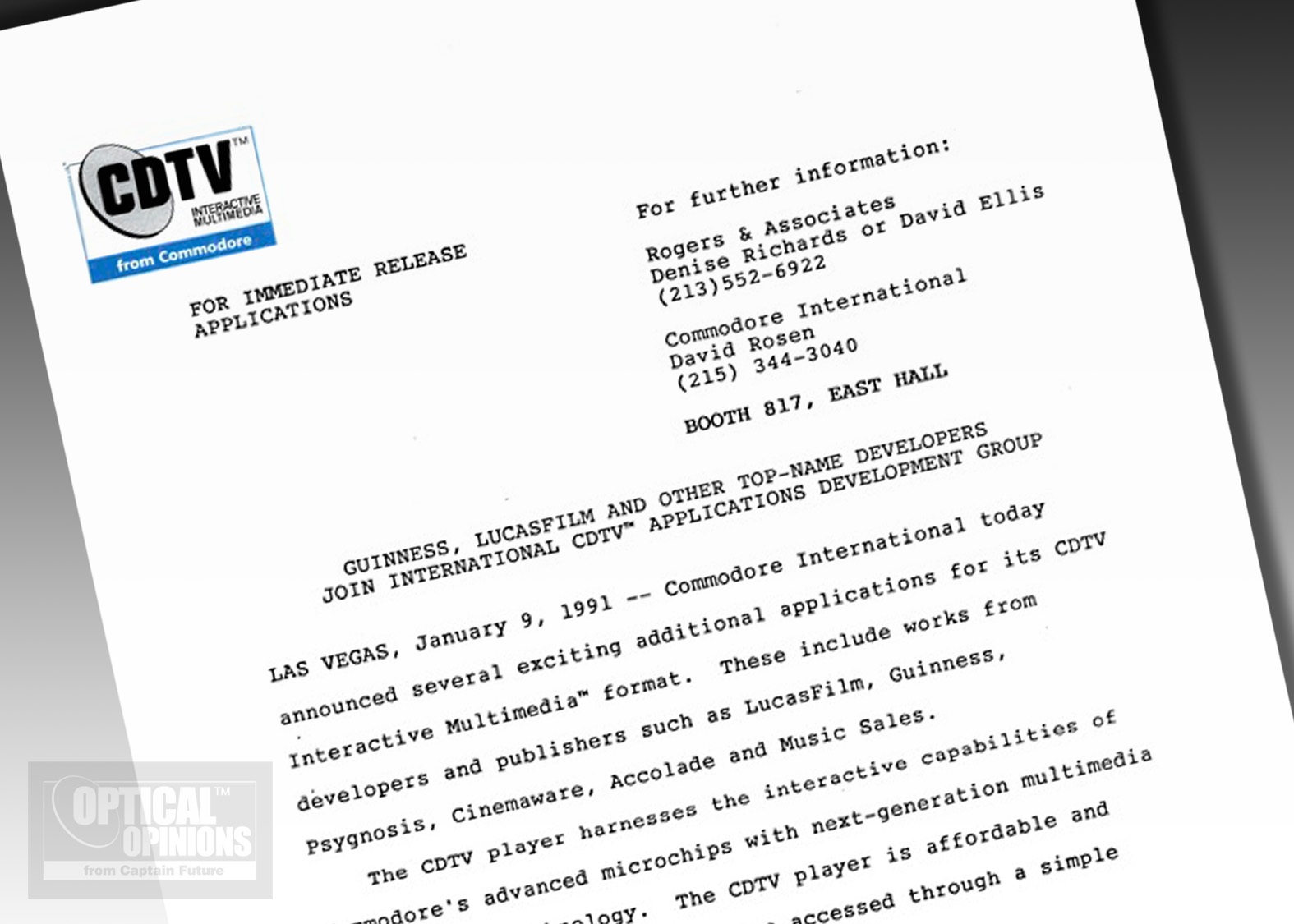
Though, here’s where I have to stop defending Commodore (again): most of them never shipped anything. Ocean, whose name was printed on roughly half of all Amiga game boxes in existence, shipped nothing. LucasFilm shipped nothing (the German CDTV releases of Loom and Indy were done by the German license holder). EA shipped nothing. You get the drift. Abysmal sales figures for CDTV players made publishers reluctant to commit to a small installed base, and meant the commitments quietly evaporated one by one. Not a great look. But I’d argue it reflects just how stubborn the chicken-and-egg loop is, even when you’re throwing any real money at it.
Bad Company
Here’s the thing though: Commodore wasn’t the only one who hit this wall. Philips had been developing CD-i since 1986, years before Commodore had conceived CDTV. They had the resources of one of the largest consumer electronics companies on the planet, a company that had co-invented the compact disc. They had full-time content studios, dedicated publishing arms and budgets that made Commodore’s five million dollar fund look like a rounding error. And they still couldn’t crack it. CD-i launched in late 1991, dragged on with a persistent content problem until 1998, and then quietly disappeared. Its most famous titles are remembered as a punchline.
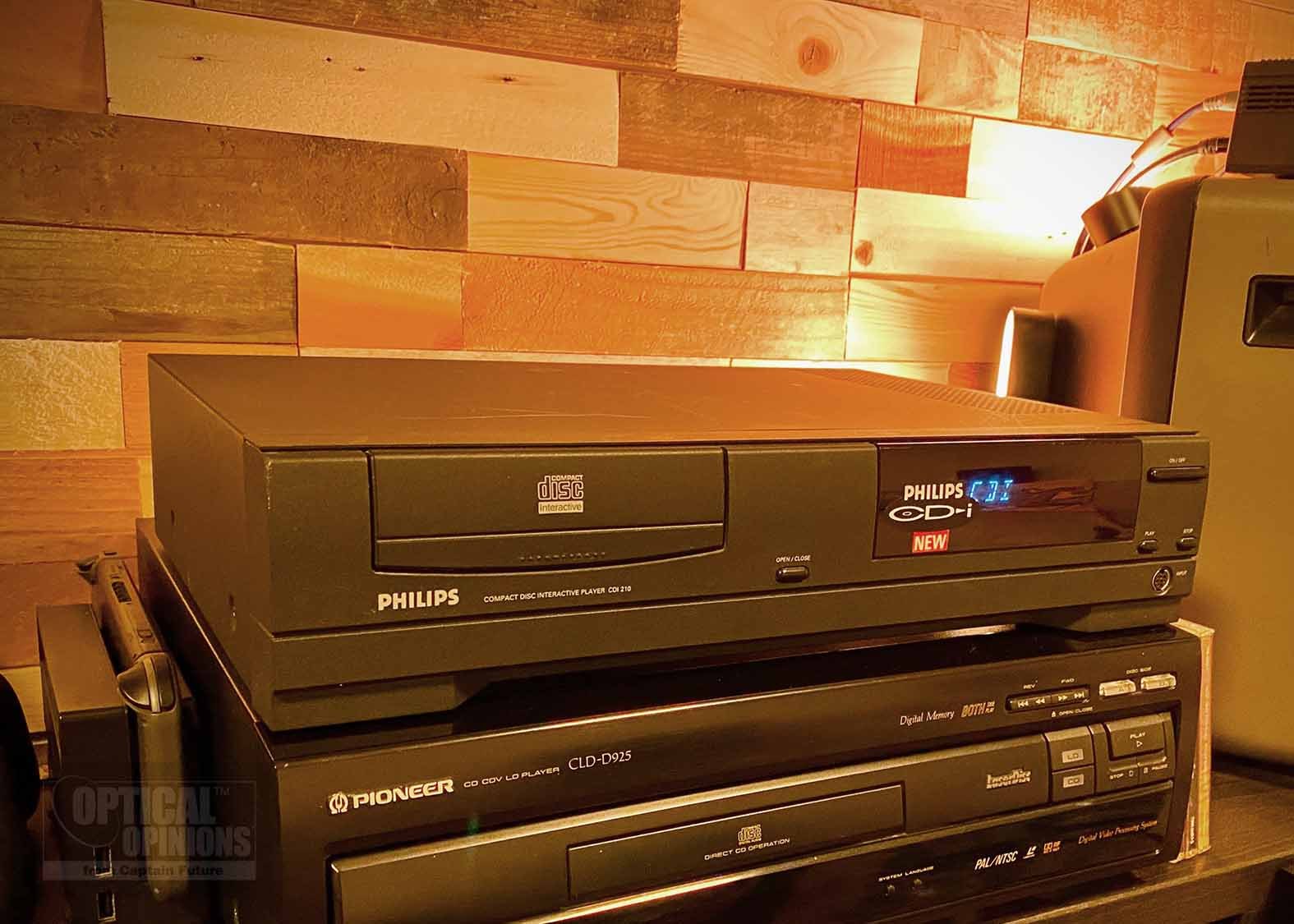
The point I’m trying to make here isn’t that bad company loves bad company. The point is that interactive multimedia in the living room was an idea whose time had genuinely not yet come, not for anyone, at any price point, with any level of publisher support. What actually did take off by the mid-1990s was CD-ROM on the multimedia PC, but this worked because the PC was already in millions of homes doing other things! Neatly sidestepping the chicken-and-egg problem because the installed base already existed.
Commodore’s post-Tramiel leadership is often accused of utter incompetence, and often deservedly so. But in the case of CDTV, a little more nuance is warranted in my opinion. Many mistakes were made, yes. But given that Commodore owned the Amiga, a machine that was years ahead of the PC in multimedia capability when it launched in 1985, it would have been crazy for Commodore not to try to and conquer the living room by combining the seemingly endless storage capacity of CD-ROM with their Amiga technology. They tried. They put in real money and real effort, but the market just wasn’t ready. That’s not the same as incompetence, even if the outcome looks identical from the outside. ■
See you on the next track!
— Captain Future
